The Hidden Cost of Smoking: How Carbon Graphite Clogs Your Lungs at the Cellular Level
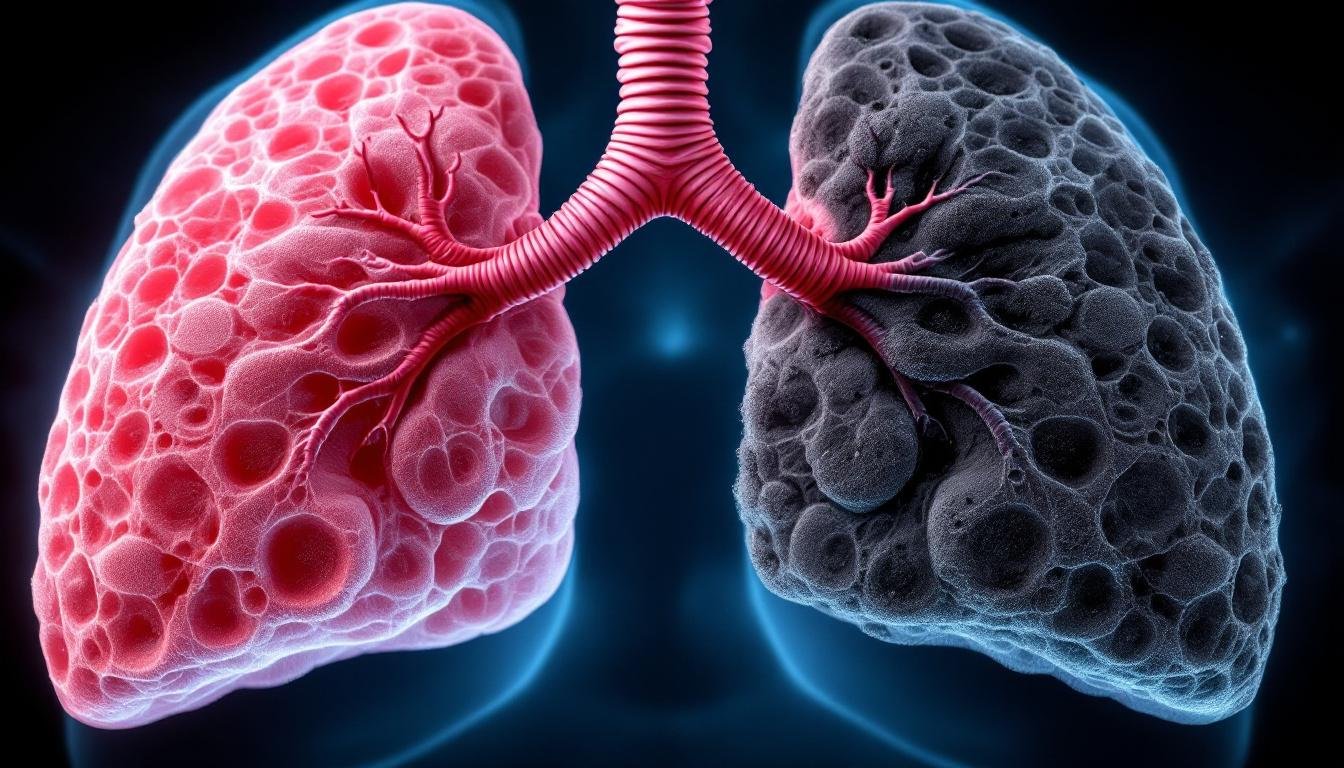
Smoking is often discussed in terms of long-term risks like cancer or heart disease, but the immediate, physical reality of what happens inside your lungs with every puff is far more mechanical and startling than most realize. When you inhale cigarette smoke, you aren’t just breathing in gas; you are depositing a physical residue—a soot-like “graphite”—that systematically dismantles your respiratory architecture, one alveolus at a time. This process doesn’t just “harm” your lungs; it physically occupies them, turning a vibrant, pink organ into a reservoir of solidified carbon.
Key Takeaways: The Mechanical Destruction of Breath
- Physical Residue: Inhaled smoke leaves a “graphite-like” soot that settles in the deepest parts of the lungs.
- Alveolar Collapse: The lungs contain 400 million tiny air sacs (alveoli) that physically mummify and collapse when clogged.
- Ciliary Paralysis: Smoking destroys the tiny “hairs” (cilia) responsible for cleaning your lungs, trapping carbon forever.
- Irreversible Loss: Once the microscopic airways (bronchioles) are clogged with carbon, the damage to that specific area is permanent.
The Anatomy of an Inhale: From Trachea to Alveoli
To understand the damage, we must look at the lung’s “bronchial tree.” Air enters through the trachea (windpipe) and splits into two main bronchi. These bronchi then branch out like a tree—splitting into four, then eight, then sixteen, becoming progressively thinner until they reach the bronchioles, which are thinner than a human hair.
At the tip of these tiny branches are the alveoli. Each lung contains roughly 200 million of these microscopic sacs. This is where the magic of life happens: oxygen enters the bloodstream, and carbon dioxide is removed. In a healthy individual, these sacs are flexible, clear, and surrounded by a network of blood vessels.
The “Graphite” Effect: How Soot Traps Your Lungs
When you take a drag of a cigarette, you are introducing a fine soot (fuligem) into this delicate system. If you were to blow that smoke through a clean white cloth, you would see a dark, oily residue. Inside your lungs, that residue has nowhere to go. It travels down the bronchial tree until it hits the “dead end” of the alveoli.
Normally, your lungs have a cleaning crew: tiny, hair-like structures called cilia that sweep mucus and particles upward to be expelled. However, chronic smoking paralyzes and eventually destroys these cilia. Without this cleaning mechanism, the soot settles, hardens, and stays. Surgeons often report that in chronic smokers, the residue inside the bronchioles becomes so compacted it resembles the solid graphite of a pencil.
Short-Term Inflammation vs. Long-Term Mummification
The damage occurs in two distinct phases:
- The Acute Phase (Short-Term): The physical presence of soot triggers an immediate inflammatory response. This leads to the “smoker’s cough” and a noticeable loss of “stamina” or breath. This is the body’s desperate, albeit failing, attempt to eject the intruders.
- The Chronic Phase (Long-Term): Over 20 or 30 years, the accumulation of carbon becomes coalescent. The tiny bronchioles become physically blocked by “coal.” When air can no longer reach the alveoli, they muffle and collapse like a deflated balloon. Once an alveolus mummifies, its contribution to your oxygen supply is gone forever.
Scientific Context: The Resilience and the Limit
The human body is remarkably resilient, which is ironically why many smokers don’t feel the full weight of the damage until it is too late. Because we have hundreds of millions of alveoli, we can lose a significant percentage of our lung capacity before experiencing severe shortness of breath during daily activities. However, the loss is cumulative and, in the case of solidified carbon deposits, largely irreversible.
A healthy lung is a vibrant, healthy pink. A chronic smoker’s lung often appears mottled with black patches, resembling a piece of coal-dusted organ meat. This isn’t just a change in color; it’s a change in texture and function. The flexibility required for efficient breathing is replaced by rigid, carbon-clogged tissue.
Frequently Asked Questions
Can the lungs clear out the carbon if I quit?
While your cilia can begin to recover and inflammation will decrease after quitting, the solidified carbon “graphite” deeply embedded in the alveoli and blocked bronchioles generally remains. However, quitting stops the progression of further mummification.
Is the “smoker’s cough” a good sign?
It is a sign that your body is attempting to clear debris, but it also indicates significant inflammation and that your natural cleaning mechanisms (cilia) are being overwhelmed.
How many alveoli can I lose before I notice?
You may not notice a significant impact on sedentary activities until you’ve lost a substantial portion of your 400 million alveoli. This “silent” destruction is why many smokers don’t realize the severity of the damage until they struggle with basic tasks like climbing stairs.
Conclusion: Protecting Your Most Vital Function
We can survive days without water and weeks without food, but we cannot survive more than a few minutes without the gas exchange provided by our lungs. Every cigarette is a mechanical assault on the tiny sacs that keep you alive. Protecting your lungs isn’t just about avoiding disease; it’s about maintaining the physical infrastructure that allows you to move, think, and live.
Source: Based on the clinical insights of Dr. Drauzio Varella, “Qual é o impacto do cigarro nos pulmões?”
Disclaimer: This content is for informational purposes only and does not constitute medical advice. Always seek the advice of your physician or other qualified health provider with any questions you may have regarding a medical condition. Never disregard professional medical advice or delay in seeking it because of something you have read on this website.